
| Date / Period | Legal Basis / Regulatory Status | Tariff Rate (Swiss Imports) | Market Impact on US Retail MSRP |
| August 2025 | IEEPA Reciprocal Tariff Peak | 39% Surcharge | Immediate supply chain freeze; emergency stock imports. |
| November 2025 | Revised IEEPA Framework | 15% Rate | Brands implement baseline 5%–9% retail price increases. |
| Feb 20, 2026 | Supreme Court Ruling (6–3) | Struck Down (0%) | IEEPA authority invalidated; duty refunds litigated. |
| Feb 24, 2026 | Section 122 Balance-of-Payments | 10% Temporary Surcharge | 150-day temporary bridge surcharge initiated. |
| July 24, 2026+ | Section 301 Framework | Targeted / Threshold Duties | Permanent long-term tariff structure; retail tags remain elevated. |
If you've been watching prices on Swiss watches move around in 2026 and wondering why, you're not imagining it. The US tariff rate on Swiss imports has changed three times in under a year, and as of this writing it's genuinely unsettled again. Here's the timeline, why it matters if you're buying, and how to shop around it instead of getting caught by it.
What's actually happened in 2026
The short version: Swiss watches got hit with a 39% tariff in August 2025 under emergency trade powers. In November 2025, the US and Switzerland signed a joint statement cutting that to a 15% ceiling, implemented in December and made retroactive to November 14. Then in February 2026, a separate global 10% surcharge (Section 122 of the Trade Act) was layered on top for most countries running a trade deficit with the US, including Switzerland. That surcharge is legally capped at 150 days, and it expired on July 24, 2026.
Since then, the administration has opened a Section 301 investigation specifically aimed at replacing that expired surcharge with a more targeted, country-specific rate. As of September 2026, that investigation hasn't concluded, which means the actual tariff a Swiss watch is landing under right now is genuinely in flux. Anyone telling you a single fixed number is either simplifying or out of date.
Why this matters if you're actually buying
A few practical effects show up when tariffs swing like this. Retail prices lag policy changes, which means brands and retailers don't reprice instantly every time a rate shifts. The inventory bought under one tariff regime often sells at prices set under a different one. Swiss-made pieces are the ones exposed, though. This entire situation is specific to goods manufactured in Switzerland. A watch built in Germany, Japan, Singapore, or the US isn't subject to the Swiss tariff schedule at all, regardless of how "Swiss-style" its design is. This means the secondary market reacts too. Uncertainty about future import costs pushes some buyers toward the pre-owned market for Swiss pieces, which can shift used pricing independently of new-watch MSRPs.
How to shop smart right now
If you have your eye on a Swiss-made watch, check current landed pricing before you buy rather than assuming a number you saw a few months ago still holds. The rate has genuinely moved multiple times this year alone. Marathon, for example, builds its watches in La Chaux-de-Fonds, Switzerland to actual government contract specifications, so it's directly in scope for whatever the current Swiss rate turns out to be; you can see current pricing on the Marathon collection page.
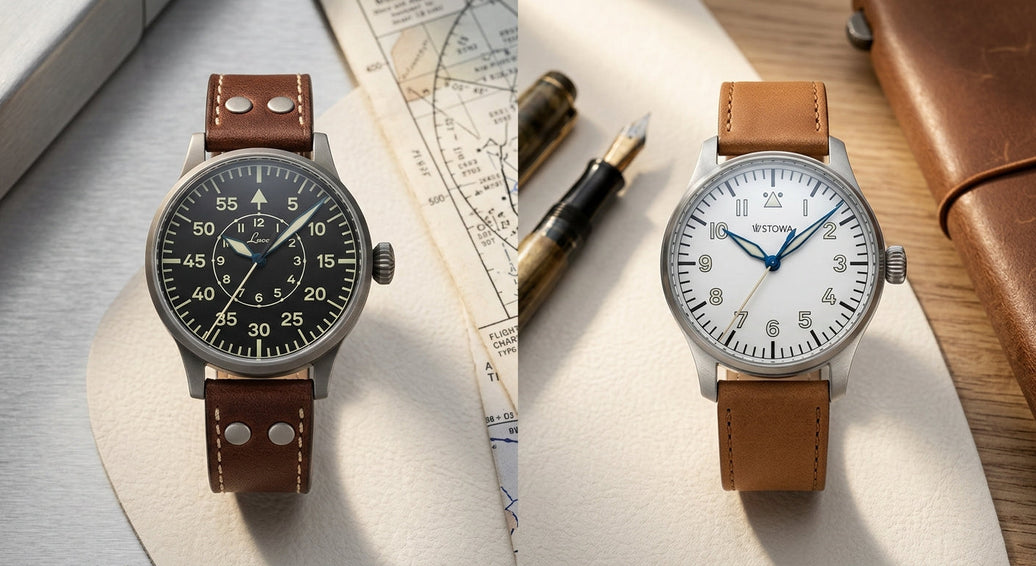
If tariff uncertainty isn't something you want to think about at all, watches built outside Switzerland sidestep the issue entirely. This is worth keeping in mind if you're comparing a Swiss-made piece against a German or independently-made alternative in the same price range.
FAQ
Does the tariff apply to pre-owned or vintage Swiss watches?
Import tariffs are generally assessed on goods entering the country, which mainly affects new inventory coming from Switzerland. A watch already inside the US and changing hands secondhand isn't being re-imported, so it isn't hit by the same mechanism — though pricing on the used market can still shift in response to what's happening with new watches.
Will prices go back down if the tariff drops?
Not necessarily, and not immediately. Retail pricing tends to be sticky — brands are often slow to lower prices even after a cost input drops, though they typically move faster to raise them.
Is this only affecting expensive luxury watches?
No — the tariff applies to Swiss-made watches broadly, not just luxury tiers. Watches like Marathon's field and dive watches, which sit well under typical "luxury Swiss" pricing, are still Swiss-made and still in scope.
How do I find the current rate before I buy?
Because this has changed multiple times in 2026 alone, the safest approach is checking current news or the retailer's current listed price rather than relying on a number from even a few months back.











Leave a comment