
Pick up almost any tool watch built for genuine low-light use and you'll run into one of two technologies: Super-LumiNova, the glow-in-the-dark pigment most watches use, or tritium gas tubes (often labeled H3 or GTLS), the self-powered option found on watches like Marathon's military-spec field and dive pieces. They solve the same problem of reading the time in the dark in almost opposite ways, and the "which is better" debate comes up constantly among people shopping for their first real tool watch.
Here's what actually separates them, without the marketing spin.
How each one actually works
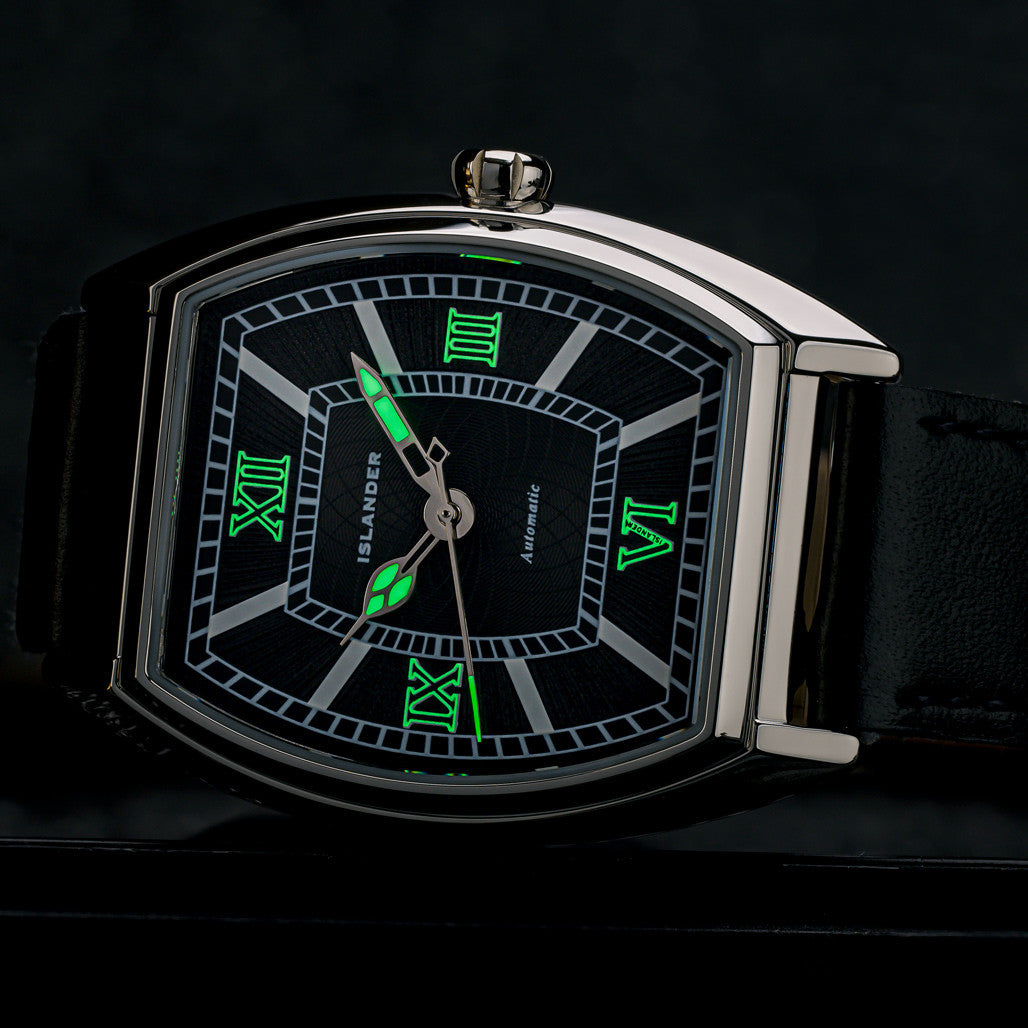
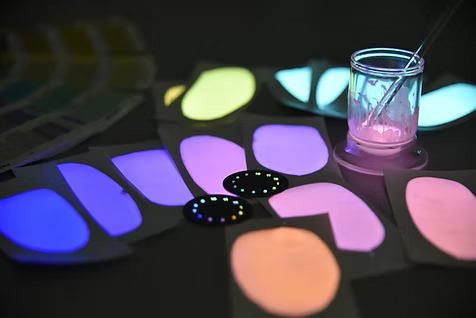
Super-LumiNova is a non-radioactive photoluminescent pigment. It absorbs light like sunlight, a lamp, your phone flashlight, and re-emits it as a glow that fades over time. No power source, no battery, no radioactive material. It just needs to be "charged" by light before it'll glow.
Tritium tubes work completely differently. Tritium is a radioactive isotope of hydrogen (hydrogen-3, hence "H3") sealed inside tiny glass vials coated with phosphor on the inside. The tritium's radioactive decay excites the phosphor coating, which glows continuously. No charging required, ever. That's why tritium-equipped watches glow the same at 3pm as they do at 3am, light exposure or not.
Brightness over time: the lume bloom trade-off
This is where the real trade-off lives. Fresh off a strong light source, Super-LumiNova is genuinely brighter than tritium. That initial "lume bloom" is intense and satisfying to look at. The catch is how fast it fades: quality Super-LumiNova starts dropping off noticeably within the first hour, and by the 60-90 minute mark it's often dim enough to be hard to read without a fresh charge.
Tritium starts dimmer but stays completely consistent. It doesn't spike and fade, it just glows at roughly the same low-but-readable brightness, hour after hour, with no need to expose it to light first. For anyone who's ever fumbled to check the time on a Super-LumiNova watch at 4am, long after the bedside lamp charged it, that consistency is the entire appeal of tritium.
Lifespan: hours vs. decades
Super-LumiNova itself doesn't really "wear out". The pigment can keep absorbing and releasing light for decades, as long as it gets recharged regularly. What you're managing is the charge-to-fade cycle every single time you want to see it in the dark.
Tritium tubes are on a fixed clock from the day they're made: tritium has a half-life of about 12.5 years, meaning the glow gradually and predictably dims over roughly that timeframe rather than fading minute to minute. A tritium watch bought today will still be glowing, just a bit dimmer, well over a decade from now, no maintenance required.
Is tritium actually safe to wear?
Yes. This is the question people ask most, understandably, given the word "radioactive." The beta particles tritium emits are extremely low-energy and can't penetrate the sealed glass tube itself, let alone a watch crystal or your skin. Tritium tube watches are legal, widely sold, and worn daily by military and law enforcement personnel specifically because the technology is considered safe at the quantities used in watchmaking.
Which should you choose?
It comes down to how you actually use the watch in the dark:
- Want the brightest possible glow right after charging, and don't mind it fading? Super-LumiNova is the better fit and it's what the vast majority of dive and field watches use.
- Need to reliably read the time in the dark hours after any light exposure like camping, overnight shifts, no bedside lamp? Tritium's steady, no-charge-needed glow is built for exactly that.
- Don't want to think about it at all? Tritium wins here too. There's no charging ritual, it just works.
If steady, always-on legibility is what you're after, Marathon builds their field and dive lineup specifically around tritium tubes rather than Super-LumiNova. The GPQ-D field watch is a good example of the technology done right.
FAQ
Does tritium glow without any light exposure at all?
Yes and that's the defining difference. Tritium's glow comes from radioactive decay inside the sealed tube, not from absorbed light, so it glows continuously regardless of whether it's ever seen a light source.
How long does tritium lume actually last before it's unusable?
Tritium has a roughly 12.5-year half-life, meaning brightness gradually decreases over that period rather than cutting off suddenly. Most tritium watches remain usably legible well past a decade of ownership.
Can tritium tubes be replaced when they eventually dim too much?
On watches designed for it, yes. The sealed tubes can be swapped out by a qualified watchmaker as a service item, similar to a battery replacement, though it's less commonly needed than most owners expect.
Is Super-LumiNova or tritium better for diving?
Both are used on serious dive watches and both meet dive-watch legibility standards. Tritium's advantage shows up on longer dives or dark environments where there's no opportunity to "recharge" the lume with a light source beforehand.



















Leave a comment