
Vulcain Cricket: Technical architecture
| Feature | Vulcain Cricket (Modern V10/V14 Caliber) | Standard Mechanical Dress Watch |
| Primary Complication | Acoustic Mechanical Alarm (~20 second strike) | Time-Only / Date |
| Barrel Configuration | Twin Barrels (1 for Time, 1 for Alarm) | Single Barrel |
| Acoustic Design | Double Caseback Resonance Chamber | Standard Sealed Caseback |
| Historical Title | "The Real President's Watch" (Truman to Obama) | General Royalty / Executive Wear |
| Acoustic Peg | Vulcain Exactomatic System & Internal Anvil | N/A |
| Modern Case Sizes | 36mm (True Vintage) & 39mm (Modern Classic) | 38mm – 41mm Standard |
Vulcain watch history is short on household-name recognition and long on strange turns: the Swiss brand has changed hands at least five times, gone bankrupt, and briefly disappeared entirely. Its signature model, the Vulcain Cricket has also, since 1953, been given to more American presidents than any other watch on earth. This is how Vulcain earned its nickname, the President's Watch. That's a genuinely strange combination, and most retellings of Vulcain's history blur where the real engineering story ends and the marketing myth begins.
1947: The invention behind the Vulcain Cricket
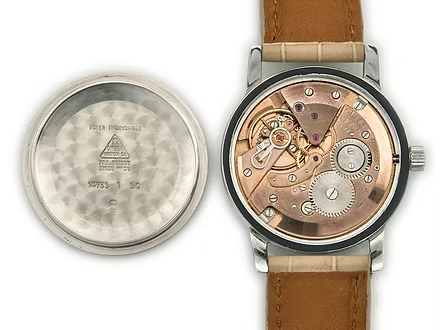
Vulcain traces to 1858 in La Chaux-de-Fonds, founded by the Ditisheim family, initially making high-complication pocket watches. The real achievement came later: mechanical alarm wristwatches are hard to build, because you need enough stored energy to both keep time and drive a loud, sustained noise. Two earlier attempts by rival firms, in 1910 and 1920, failed for exactly that reason. Starting around 1942, Robert Ditisheim spent five years solving it, and the result was a separate mainspring barrel just for the alarm, a perforated case-back, an internal resonating membrane. This launched in 1947 as the Cricket. It won the Neuchâtel Observatory chronometry competition the following year, a real precision-timing contest, not brand puffery.
It's a useful contrast to how most of today's small watch brands actually operate. It's worth a look at our roundup of the microbrands worth watching right now if you want to see who's doing this well without a seventy-year hsitory to lean on.
The "President's Watch" was smaller than it sounds
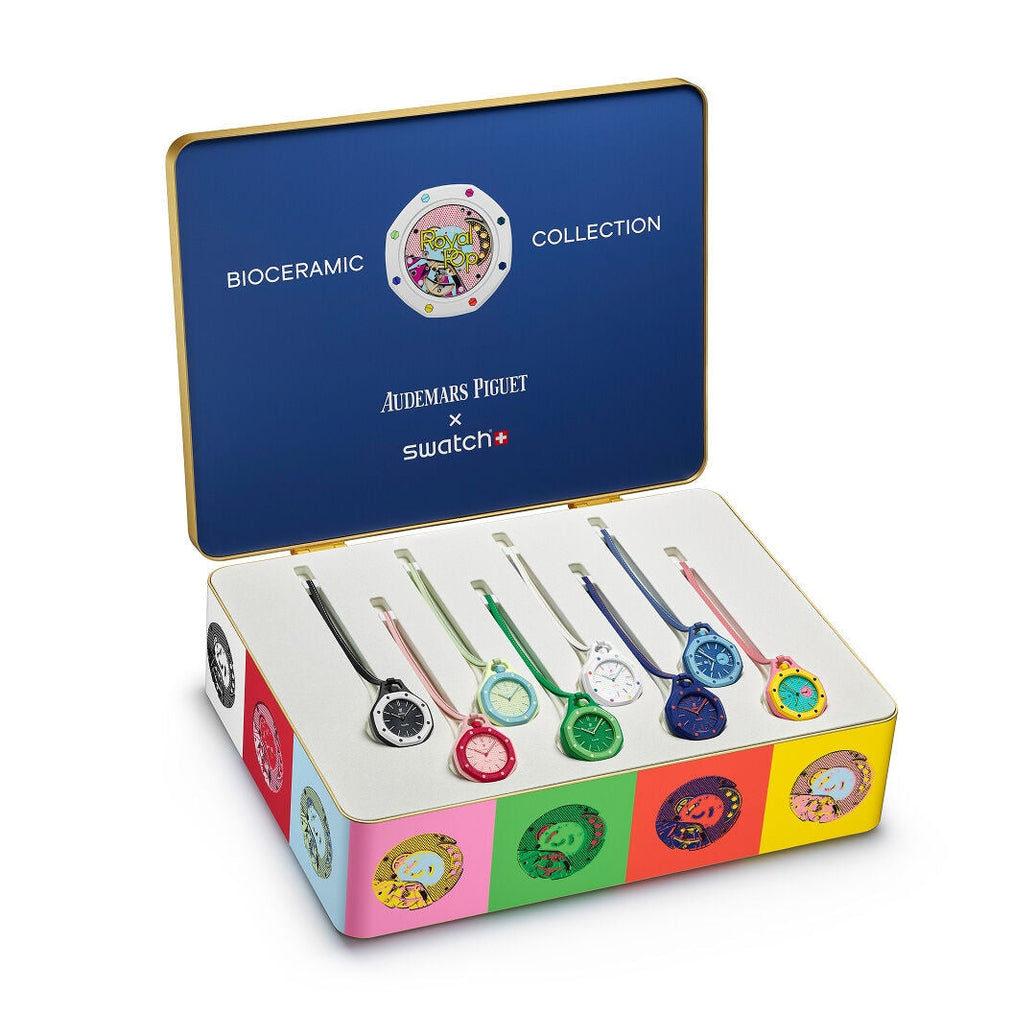
Here's where it gets more interesting. It is not a state tradition or a government gift program. It's a chain of individual gestures that calcified into the appearance of one. Harry Truman got his gold Cricket in January 1953 as a retirement gift from the White House Press Photographers' Association, case-back engraved "One More Please." Nixon got his from a watch collectors' club in 1955, while he was still VP. Lyndon Johnson is the true believer of the bunch, and he bought his own in Geneva, had his signature printed on the dial, then ordered roughly 200 more to hand out as gifts. This is the point where "the president wears one" quietly becomes "the president is also a distributor." The tradition nearly died with the company itself, then was reportedly revived in 1988 by a single Finnish jeweler, Keijo Paajanen, who kept it alive largely on his own. This makes it a very well-run decades-long gifting campaign, not an institution. However it is arguably one of the best pieces of long-run brand-building in the watch industry, in the same vein as the AP x Swatch Royal Pop Play we broke down here: a genuinely clever marketing mechanism that gets reported on as if it were a fact about the watch itself.
Vulcain's Near-Collapse and Who Owns the Brand Today
Vulcain merged into a conglomerate in 1961, got flattened by the quartz crisis like many brands, and effectively vanished for years. It had its movements built anonymously under a rival's name. The brand and patents got picked out of bankruptcy in 2001. Ownership since 2009 runs through Excellence Holding, a Swiss group.
Vulcain Watches Today: What You're Actually Buying
The current lineup includes Cricket President, Nautical Heritage, the Skindiver Nautique, Grand Prix, Monopusher. Prices run roughly CHF 1,190 to CHF 4,200. Only the Cricket line uses Vulcain's own alarm calibers, direct descendants of the 1947 original. The divers and chronographs run an ETA workhorse movement. This is similar to the some of the same category of movement powering plenty of watches in our own lineup.
If you're interested consider buying Vulcain for the Cricket, the real presidential story, and something genuinely unique. But don't forget to check out anything else in the catalog. Specifically the Skindiver. You're paying a fair price for competent, Swiss watchmaking with a good name attached. This is a similar value proposition that you get from brands we actually carry. If you want a recommendation dialed in to what you're after, talk to our Watch Advisor.
Frequently Asked Questions: The Vulcain Cricket & "President's Watch" Legacy
Q: Why is the Vulcain Cricket known as "The President's Watch"?
A: The tradition began in 1953 when the White House Press Photographers' Association gifted a Vulcain Cricket to President Harry S. Truman. His successor, Dwight D. Eisenhower, famously wore his before and during his presidency. Lyndon B. Johnson was perhaps its biggest fan, buying dozens to give away as official gifts. Nearly every U.S. President since then including Nixon, Carter, Reagan, Clinton, and Obama has been gifted or purchased a Cricket, establishing it as a diplomatic staple.
Q: How does a mechanical watch alarm actually work without a battery?
A: The Cricket uses a Twin-Barrel system. When you wind the crown in one direction, it charges the mainspring for the movement; wind it in the opposite direction, and it charges a dedicated power source for the alarm. When the set time arrives, a small hammer rapidly strikes a metal membrane/anvil inside the caseback at 18,000 vibrations per hour. The outer double-caseback acts as a soundboard, amplifying the striking hammer into a sharp, buzzing "chirp" that resembles a cricket.
Q: What is the "Exactomatic" system in Cricket movements?
A: Patented by Vulcain, the Exactomatic system is a specialized shock-absorption and friction-leveling design for the balance wheel pivots. It ensures that the balance wheel experiences identical friction regardless of the watch's orientation (dial up, dial down, or vertical). This gives the hand-wound movement far greater amplitude stability and higher daily timekeeping accuracy.
Q: How do you set the alarm hand on a Vulcain Cricket?
A: The Cricket uses a prominent pusher button located above the crown (usually at 2 o'clock). Pressing this pusher pops the main winding crown out into the setting position. From there, turning the crown rotates the central fourth hand (tipped with an arrow) counter-clockwise to your desired alarm time. Pushing the crown back in arms the alarm mechanism.
Q: What are the modern updates to the Cricket collection?
A: While Vulcain faithfully reproduces the classic 36mm and 39mm stainless steel models using the in-house hand-wound V10 movement, they have introduced cutting-edge variants like the Cricket Titan. This release utilizes Grade 5 titanium for both the 39mm exterior and key internal movement components (bridges, mainplate, and anvil). The lower density and high rigidity of titanium enhance the acoustic resonance of the alarm while cutting overall weight.











Leave a comment