
| Feature | HV1000 (PVD Coating) | Cerakote (Ceramic Coating) |
| Material Base | Titanium Nitride / Chromium | Ceramic-Polymer Composite |
| Hardness (Vickers) | ~1,000 HV | ~800 - 900 HV |
| Application | Molecular Vapor Deposition | Heat-Cured Liquid Spray |
| Thickness | Ultra-thin (Microns) | Slightly Thicker (0.01mm) |
| Finish Type | Metallic / Industrial Matte | Eggshell / Earth-Tones / Custom |
| Best For | Scratch Resistance | Impact Protection & Custom Color |
If you've spent any time shopping for titanium field watches, you've run into both of these coating names. They both get marketed as tough. They both show up on watches in the same price range. And if you ask most retailers what the difference is, you'll get a vague answer about durability and move on none the wiser. Here's what they actually are, and what they mean for a watch you're going to wear every day.
They're solving the same problem
Titanium is light, corrosion-resistant, and hypoallergenic. It's also relatively soft for a metal. Bare titanium scratches easily and shows wear faster than stainless steel. Both HV1000 and Cerakote exist to fix that. The question is how they go about it.
HV1000: a coating born in aerospace
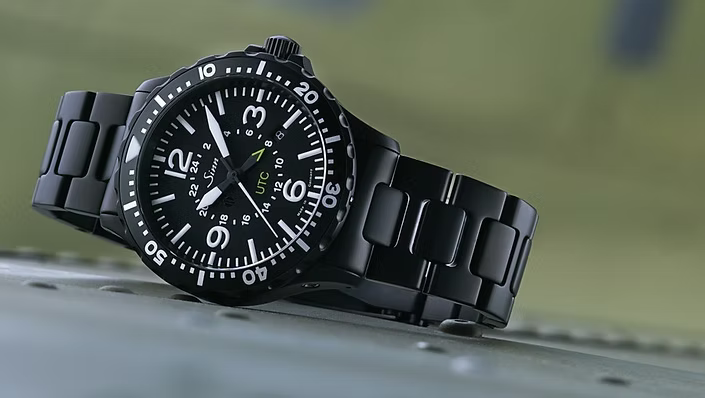
HV1000 is a PVD coating physical vapor deposition. The "HV1000" part refers to its score on the Vickers hardness scale. Bare titanium sits around HV200-300. An HV1000 coating is three to four times harder than the metal underneath it.
The process deposits an extremely thin layer of hard material, typically titanium nitride, onto the case surface under high heat and vacuum. It bonds at a molecular level. The coating is measured in microns. You can't feel it, but it's there, and it's genuinely hard.
The limitation is color. PVD naturally produces black, dark grey, and gold tones. If you want something more interesting than that, you need a different approach.
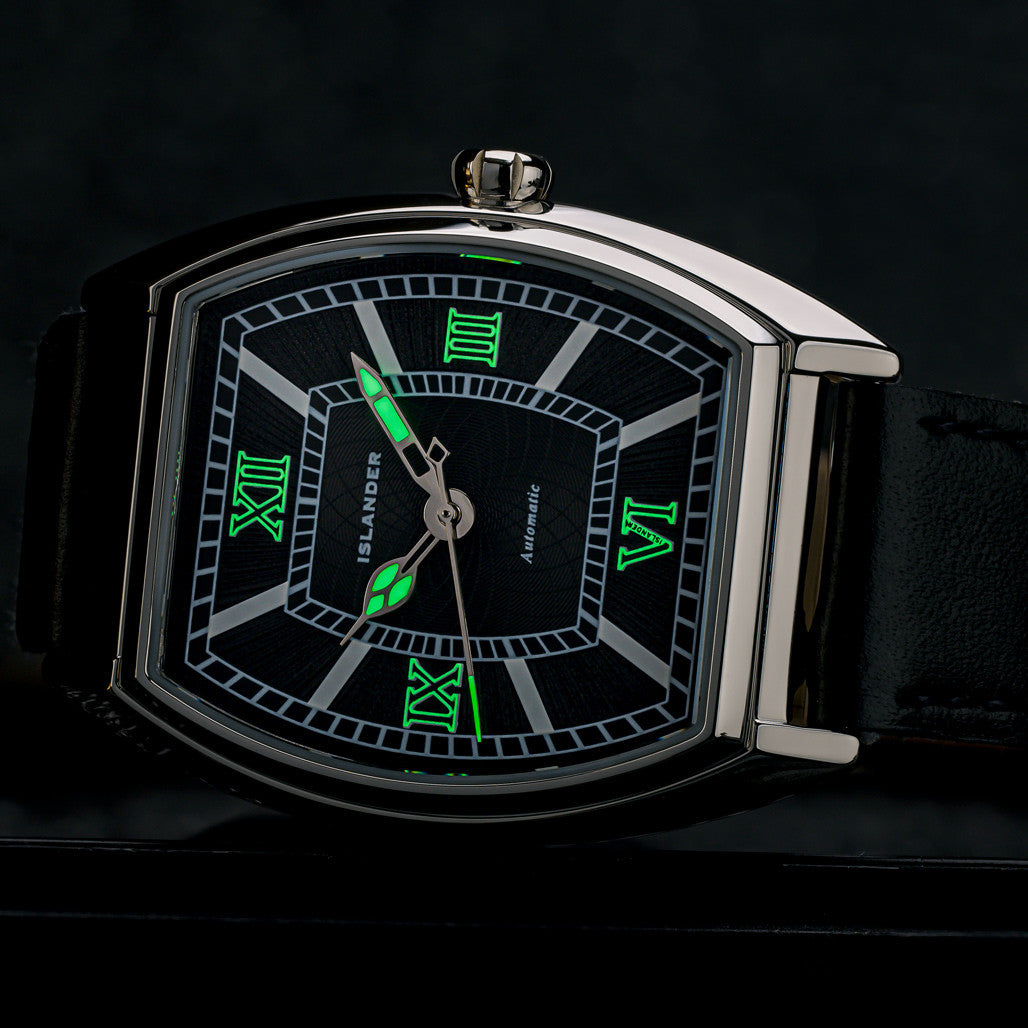
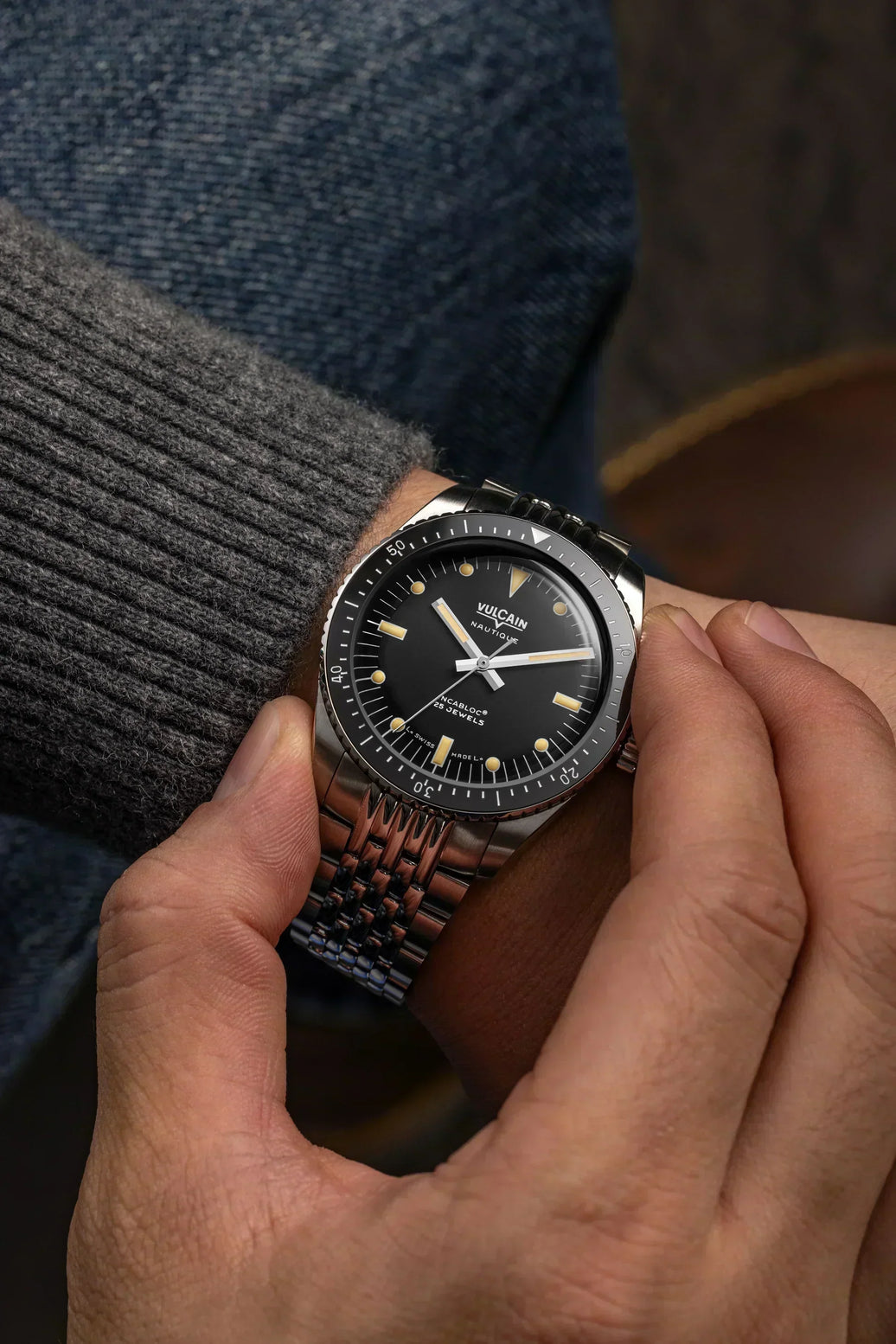
Here are some of the Islander watches we carry that have an HV1000 coating.
Cerakote: a firearms coating that found its way onto watches
Cerakote started in the gun industry. It's a polymer-ceramic coating applied as a liquid, sprayed onto the surface, and cured at high temperature. If you've seen a matte olive or flat dark earth rifle, you've seen Cerakote.
Its jump to watches makes sense. It's the same properties that protect a firearm barrel from corrosion, heat, and hard use which translates well to a watch case. Hardness-wise it scores around HV800-900 depending on the formulation, which is slightly below HV1000 PVD on paper. In real-world daily wear, that gap is basically irrelevant.
Where Cerakote genuinely wins is color. Because it's applied as a liquid it can be tinted to almost anything. Prairie tan, olive drab, flat dark earth, any muted earthy tone you can think of is available, without sacrificing its protective properties. That's why you see Cerakote on field watches with interesting colorways and PVD on watches that come in black.
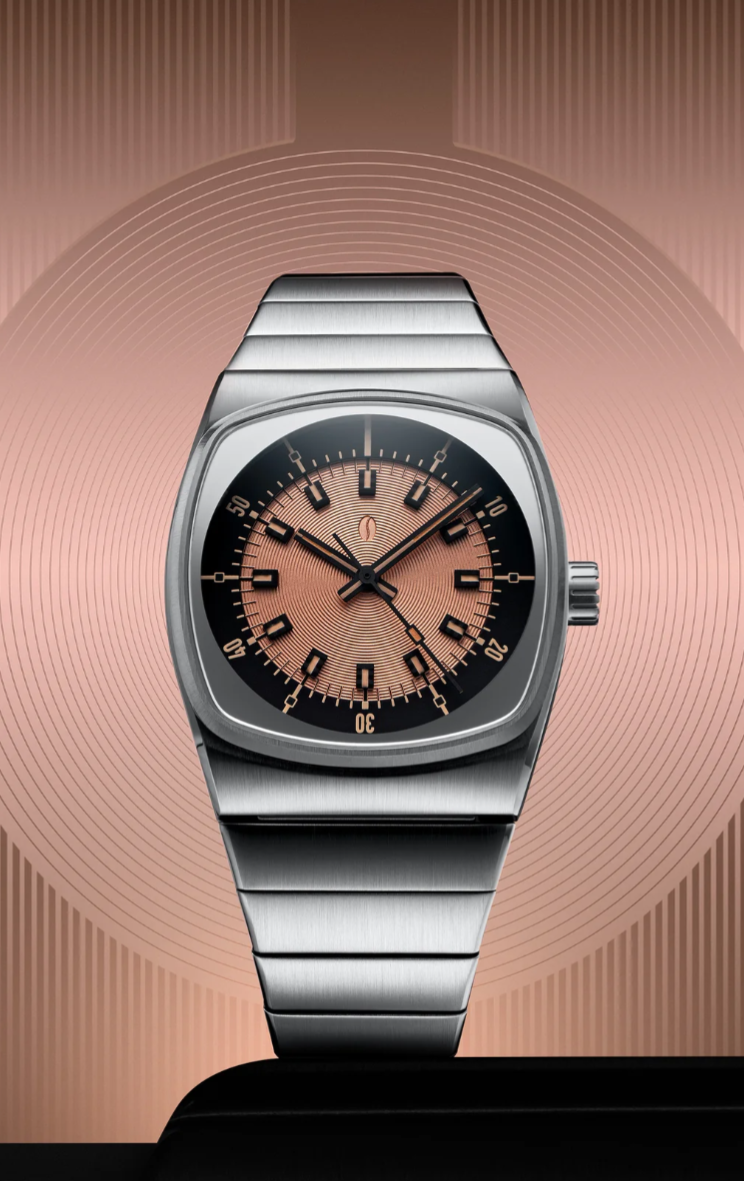
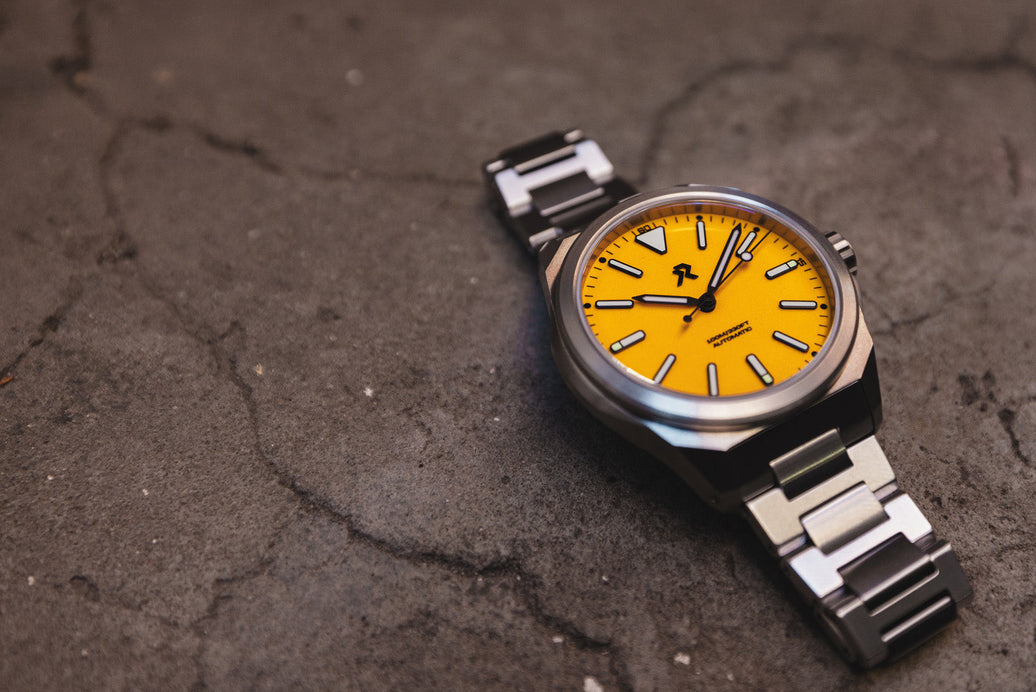
Here are some of the RZE watches that we carry with a Cerakote coating.
The honest comparison
| HV1000 PVD | Cerakote | |
|---|---|---|
| Hardness | ~HV1000 | ~HV800-900 |
| Application | Molecular bond | Polymer-ceramic cure |
| Color range | Limited | Almost unlimited |
| Corrosion resistance | Excellent | Excellent |
| Real-world durability | Excellent | Excellent |
| Origins | Aerospace/industrial | Firearms |
The hardness edge goes to HV1000. The color flexibility edge goes to Cerakote. For a watch you're wearing daily, hiking in, or traveling with, both are more than adequate. You'd have to work hard to find the limit of either coating in normal use.
Where Cerakote can fall short is sharp impacts at edges. Older formulations of it could chip. Modern Cerakote has largely addressed this, but it's worth knowing. PVD, being thinner and molecularly bonded, tends to wear more evenly over time.
What this actually means when you're shopping
The coating shouldn't be the deciding factor. The watch underneath it should be. What matters is whether the manufacturer put a quality coating on a quality base material with a case design worth protecting.
That said, if you're drawn to earthy muted colorways, Cerakote is probably what's making them possible. If you want maximum hardness in a more traditional black or dark tone, HV1000 is the natural choice.
We carry both. The RZE Urbanist Solar in Prairie Tan and Lodgepole Pine use Cerakote, which is how they achieve those colors on a titanium case. The Islander Babylon HV1000 in Charcoal, Olive, and White use HV1000 PVD. Both are titanium field watches right around $300. Both are watches we'd buy ourselves.
The bottom line
HV1000 and Cerakote are both serious coatings that do their job well. Neither is dramatically better for watch use. If someone tries to sell you on one being vastly superior to the other, they're probably trying to justify a price difference that doesn't exist.
Pick the watch. The coating will take care of itself.
Frequently Asked Questions: Titanium Watch Coatings
Q: Is HV1000 coating actually scratch-proof?
A: While no coating is 100% scratch-proof, an HV1000 rating means the surface is roughly 4-5 times harder than standard 316L stainless steel. It is highly resistant to "desk diving" marks and light abrasions from outdoor gear, though it can still be marked by harder materials like sapphire or concrete.
Q: Can Cerakote on a watch chip off?
A: Modern Cerakote (H-Series) is incredibly resilient and bonds tightly to the metal. However, unlike PVD (HV1000) which bonds at a molecular level, Cerakote is a "layer." Under extreme impact on a sharp edge, it can technically chip, whereas HV1000 is more likely to show a deep scratch.
Q: Why do titanium watches need a coating in the first place?
A: Bare Grade 2 titanium is actually softer than stainless steel, making it prone to "snail trails" and surface scuffs. Brands like RZE and Citizen use coatings like HV1000 to give you the lightweight benefits of titanium with the scratch resistance of a much harder material.
Q: Can a Cerakoted or HV1000 watch be refinished?
A: No. Unlike stainless steel, which can be brushed or polished to remove scratches, these coatings cannot be "touched up." If the coating is compromised, the entire case would typically need to be stripped and recoated by a specialist.
Q: Which coating is better for saltwater exposure?
A: Both are exceptional. Titanium itself is naturally immune to saltwater corrosion, and both HV1000 and Cerakote provide an additional barrier that is highly resistant to salt, sweat, and chemicals.













Leave a comment