
Dial Architecture: Vitreous Enamel vs. Industrial Finishes
| Feature | True Vitreous Enamel (Grand Feu) | Standard Painted / Lacquered |
| Material Base | Silica glass powder fused to a metal plate. | Liquid acrylic, polyurethane, or oil paint. |
| Manufacturing | Fired in a kiln at 1,400°F to 1,650°F. | Air-dried or chemically cured at room temp. |
| Failure Rate | Up to 70% crack or warp during production. | Near 0% failure; easily automated. |
| Longevity | Permanent color; completely immune to UV fading. | Subject to UV discoloration and aging over decades. |
| Visual Depth | Unique "milky" translucence with a subtle soft sheen. | Flat or highly uniform gloss/matte texture. |
| 2026 Entry Cost | $1,200 - $3,500 (Seiko, microbrand comps) | $50+ (Standard entry-level standard) |
When you look at most modern timepieces, you are viewing a masterclass in industrial efficiency. A standard brass or copper blank is stamped out by a machine, sprayed with a precisely mixed lacquer or paint, and printed with crisp markers. It looks sharp, clean, and perfectly uniform. But if you have ever sat a standard painted dial next to a genuine enamel watch dial, you immediately notice that the two are playing an entirely different sport.

An enamel dial possesses an unmistakable visual depth. The way it catches light at the edges, the subtle pooling around the date window, and the pure, rich intensity of its color make standard painted dials look flat by comparison. If you are evaluating watch dial materials for your next collection piece, here is everything you need to know about what an enamel dial is, how it’s made, and why watch enthusiasts gladly pay a premium for it.
What is an enamel watch dial?
At its core, watch enameling is not painting. It is the art of fusing glass to metal using extreme heat. The production process requires an incredible level of artisanal skill. The artisan starts with a thin base plate typically made of copper, silver, or gold. Silica glass is ground into an incredibly fine, flour-like powder and mixed with water to create a paste. This is meticulously applied to the metal blank. The dial is placed into a specialized kiln heated to temperatures ranging between 1,300°F and 1,500°F (700°C to 800°C). Under this intense heat, the glass powder melts, liquefies, and fuses permanently to the metal base. This sequence isn't done just once. To achieve the perfect depth, opacity, and color density, a single dial must undergo this dusting and firing sequence anywhere from 4 to 10 times.
Enamel vs. Painted dials: The critical differences
To understand why luxury watch brands and independent microbrands alike charge a premium for this material, it helps to break down exactly how enamel deviates from standard manufacturing across three core areas:
Visual texture and the "meniscus effect"
Standard dials are painted, anodized, or chemically plated, resulting in a beautifully flat, perfectly consistent texture. Enamel, because it is melted glass, behaves like a liquid before it hardens. It has a high surface tension, which creates a soft, organic curvature around the edges of the dial, sub-dials, and the date window cutout. This curvature, often called a meniscus, gives the dial an unmistakable dimensional quality. White enamel looks like heavy cream. Black enamel looks like an infinite pool of oil.
Lifespan, oxidation, and color permanence
Over decades, standard painted dials are vulnerable to environmental degradation. UV rays from the sun can fade colors, moisture can oxidize the base metal, and paint can eventually crack or peel. Genuine enamel is virtually immortal. Because it is chemically inert glass, it does not fade, change color, or oxidize over time. A high-quality enamel watch dial made today will look exactly the same 200 years from now.
The brutal manufacturing failure rate
When a factory stamps and sprays a standard dial, the success rate is nearly 100%. With enamel, the kiln is an unforgiving environment. Every single time a dial goes into the heat, it risks warping, bubbling, cracking, or trapping a microscopic dust speck. If a flaw appears on the final firing, the entire dial is ruined and thrown away. In traditional Grand Feu production, it is common for up to 75% of the dials to be rejected.
Microbrands and the modern enamel revival
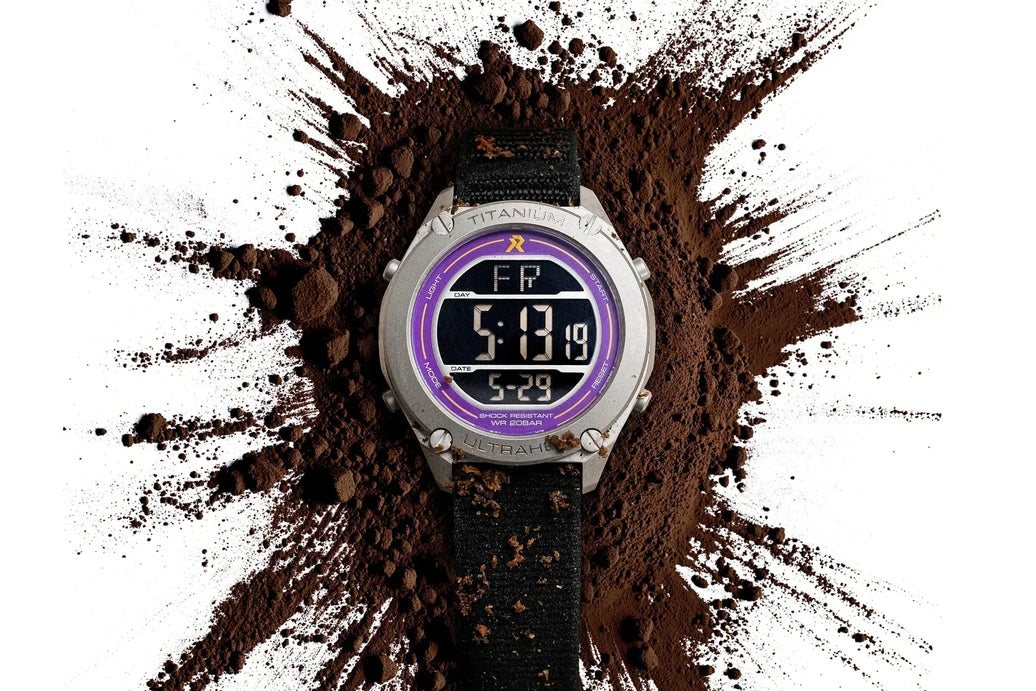
Historically, genuine enamel was a luxury reserved exclusively for high-end Swiss houses charging five-figure prices. However, independent microbrands have disrupted the industry by bringing this traditional artistry down to accessible price points. A prime example of this modern horological revival is the RZE Resolute Pro which we carry in our store Smallseconds Watch Reviews. RZE is widely known for building ultra-tough, adventure-ready titanium field watches, but the Resolute Pro steps into the realm of high craft. By pairing a rugged, scratch-resistant titanium case with a genuine enamel dial, it creates a striking contrast. You get the tank-like durability of an outdoor tool watch alongside the deep, glassy, premium luster that only fired enamel can provide. It's the ultimate blend of durability and traditional artistry.
The 4 main types of watch enameling
While the solid enamel found on the Resolute Pro is the most popular, master enamalers also use several specialized variations to create intricate, high-end designs.
-
Grand Feu (Great Fire): The traditional, purist method where multiple layers of enamel paste are fired sequentially at maximum heat. This yields the cleanest, deepest solid colors.
-
Cloisonné: The artisan maps out a complex design using incredibly thin gold wire and fills each individual cell with different colored enamels before firing.
-
Champlevé: Cells or troughs are engraved or carved directly into the metal base plate, which are then filled with enamel powder and baked flush.
-
Flinqué: The base metal is decorated with an intricate geometric pattern via guilloché and then covered with a translucent colored enamel so the underlying texture shines through.
Is an Enamel Watch Worth It?
Standard dials are excellent for modern tool watches, everyday beaters, and ultra-precise industrial aesthetics. They are durable, practical, and cost-effective. But an enamel dial brings an element of permanent, old-world craftsmanship back to your wrist. It is proof of human skill over machine automation. When you look down at a piece of fired enamel, you aren't just checking the time, you are looking at an unchanging canvas of glass and fire, built to outlast generations.
Explore our full collection of uniquely crafted watches at Smallseconds Watch Reviews to find your next timepiece.
Frequently Asked Questions: Understanding Enamel Dials
Q: What exactly does Grand Feu mean?
A: Grand Feu translates literally to "Great Fire." It is the traditional, incredibly difficult technique where a master artisan applies layers of powdered glass to a gold, silver, or copper dial base and fires it in a kiln at temperatures exceeding 1,400°F multiple times. Each layer carries a massive risk—if a microscopic bubble forms or the temperature fluctuates by even a single degree, the dial will instantly crack and must be thrown away.
Q: Are enamel dials fragile once they are inside the watch?
A: Not in daily wear. Because the glass is chemically fused to a solid metal backing plate, it is highly durable and completely unaffected by moisture, heat, or UV rays. However, they are highly sensitive to extreme, sharp impacts. If you drop an enamel-dial watch onto a concrete station floor, the sudden shock can cause micro-fractures or "chipping" around the center pinion hole, which cannot be repaired and requires a full dial replacement.
Q: What is the difference between Cloisonné and Champlevé enamel?
A: These are two distinct ways of creating intricate patterns or artwork with glass. In Cloisonné, the artist uses incredibly thin gold wire to outline a design on the dial and then fills those tiny wire cells with colored enamel powder before firing. In Champlevé, the metal dial plate itself is physically engraved or carved out to create deep recesses, which are then filled with the enamel paste.
Q: Why does a genuine enamel dial look "different" than a painted one?
A: It comes down to light refraction. Painted dials bounce light off a flat, opaque surface. Enamel is actually a microscopic layer of glass, meaning light travels through the surface, hits the metal backing plate underneath, and bounces back out. This creates a deep, liquid, almost "wet-ink" look with soft, rounded edges around the date windows and hands that machine-painted dials simply cannot replicate.
Q: What is "Cold Enamel" and is it the same thing?
A: Absolutely not, and this is a major trap for buyers in 2026. "Cold Enamel" is an industry marketing term for an industrial epoxy resin. It is a liquid plastic that hardens without firing in a kiln. While cold enamel can look smooth and colorful when brand new, it lacks the historic artisan craft, the high scrap-rate prestige, and the permanent UV-resistance of true vitreous glass enamel. Always check for the words "Vitreous" or "Fired" to ensure you are getting the real thing.









Leave a comment