
Solar Watch Technology Matrix: Photovoltaic Mechanics & Specs
| Component / Feature | Solar Quartz (Eco-Drive / Seiko Solar) | Standard Battery Quartz | Mechanical Automatic |
| Primary Power Source | Light Photons (Sunlight & Indoor) | Non-Rechargeable Silver Oxide Cell | Physical Mainspring (Wrist Motion) |
| Energy Storage Unit | Rechargeable Titanium-Lithium Cell (CTL/MT) | Standard SR920SW / SR626SW Battery | Mainspring Barrel |
| Fully Charged Power Reserve | 6 Months to 5+ Years (with Sleep Mode) | 2 to 3 Years | 38 to 80 Hours |
| Dial Transmission | Solar-Transparent / Polycarbonate Dial | Opaque Metal / Enamel / Brass | Any Material Structure |
| Depleted Power Warning | 2-Second Jump Sweep (Low Charge Alert) | 2-Second Jump Sweep | Watch Stops Completely |
| Expected Cell Lifespan | 15 to 20+ Years (~80% capacity retention) | 2–3 Year Replacement Cycle | Requires 5–10 Year Overhaul |
A solar watch sounds almost too good to be true: a watch that never needs a battery change and keeps running as long as it sees some light. It isn't magic, and it isn't a gimmick either. A solar watch is really a quartz watch with a smarter power supply. Once you understand the three parts involved, it's easy to see what these watches are great at, where their limits are, and how to look after one.
The short answer
A solar watch has three key parts working together:
- A solar cell turns light into electricity.
- A rechargeable cell stores that electricity, so the watch keeps running in the dark.
- A quartz movement uses the stored power to keep time, exactly like a regular battery quartz watch.
In other words, solar isn't a different way of keeping time. It's a different way of powering a quartz watch. Accuracy, reliability, and low maintenance all come from the quartz movement. The solar part just removes the need to swap batteries every few years.
Collecting light
The solar cell is a thin photovoltaic panel, the same basic idea as a solar panel on a roof, scaled down to fit inside a watch. Light hitting the cell knocks electrons loose and creates a small electrical current. A watch needs very little power, so even a tiny panel produces enough.
Where the panel sits makes a big difference to how the watch looks.
Under the dial
This is the most common design. The solar cell sits beneath the dial, so the dial has to let light through. That's why many solar watches have dials that look slightly flat or semi-transparent. Lighter colors and fine textures are harder to pull off, and if you look closely in bright light you can sometimes see the panel's segments underneath.
Ring solar
In this design the solar cells sit in a ring around the edge of the dial instead of underneath it. Because nothing needs to shine through the dial, it can be fully opaque, with proper metallic finishes, sunbursts, and rich color. The trade-off is a smaller collecting area, which designers work around with efficient cells and low-power movements.
Digital and ana-digi watches
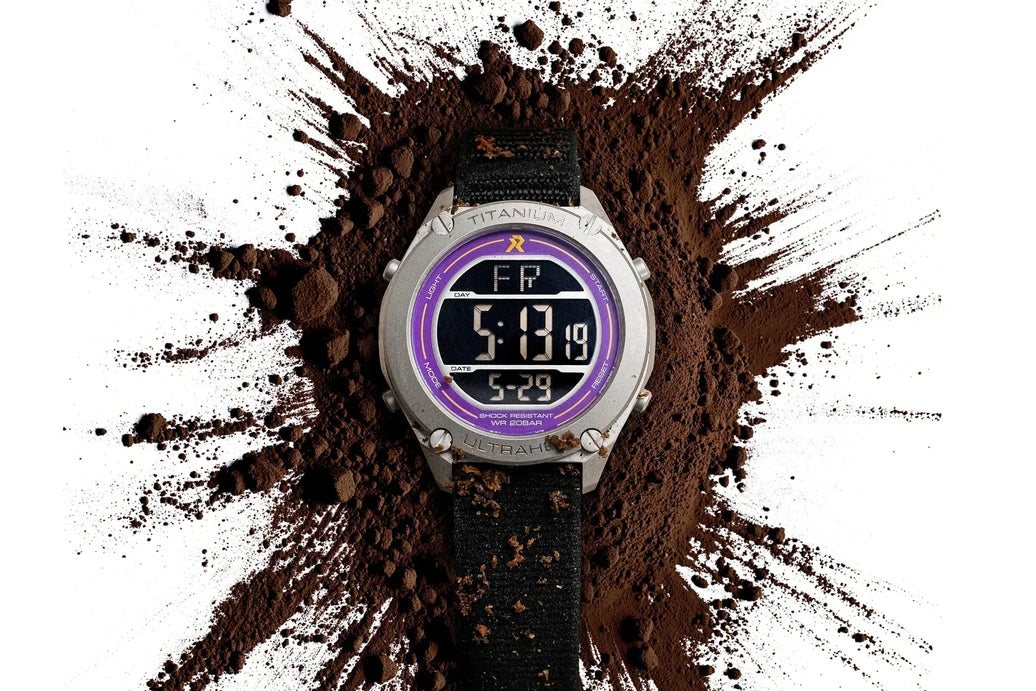
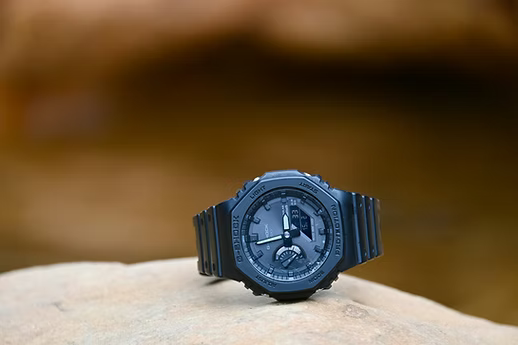
Many digital watches, like Casio's Tough Solar G-Shocks, put the panel around or behind the display. Function-heavy digital watches use more power, so their panels and batteries are sized to match.
Storing power
A solar watch doesn't run directly off light; if it did, it would stop the moment you put on a long sleeve. The electricity charges a small rechargeable cell (manufacturers call it a secondary battery or rechargeable cell), and the movement draws from that.
This is where solar watches really earn their keep. Depending on the model, a full charge can keep a watch running anywhere from several months to years in total darkness, especially if it has a power-saving mode. Most solar watches also include an overcharge protection circuit, so leaving one in the sun won't overload the cell.
Rechargeable cells do age, just slowly. Over many years the cell gradually holds a little less charge. Plenty of solar watches run well for a decade or more before that's noticeable, and the cell can be replaced by a watchmaker or the manufacturer when it eventually is.
Keeping time
From here, a solar watch works like any quartz watch. The stored power makes a tiny quartz crystal vibrate 32,768 times per second. A circuit counts those vibrations and sends a pulse to a small stepping motor once per second, which moves the hands. That's why solar watches are usually rated in seconds per month rather than seconds per day like mechanical watches.
Do solar watches need direct sunlight?
No, but sunlight charges them much faster. Outdoor daylight, even on an overcast day, is far brighter than indoor lighting, so a watch might pick up in a few minutes outside what would take hours under office lights. A few practical habits help:
- Wear it. Normal daily wear with some time outdoors is usually enough to keep a solar watch topped up.
- Store it face-up near a window when you're not wearing it, rather than in a drawer.
- Avoid extreme heat. Don't leave it on a car dashboard or another spot that gets very hot in direct sun. Heat is harder on the watch than the light is helpful.
- Watch for the low-charge warning. Many analog solar watches signal a low charge by making the seconds hand jump in two-second steps. When you see that, give it some light.
Solar vs. automatic vs. battery quartz
- Battery quartz: very accurate and inexpensive, but needs a new battery every few years, and a dead battery left in a watch can leak and damage the movement.
- Solar quartz: the same accuracy as battery quartz, with no routine battery changes and long power reserves. The main design compromise has traditionally been the dial.
- Automatic (mechanical): powered by your wrist movement, with the craftsmanship and sweeping seconds hand enthusiasts love. Less accurate than quartz, typically stops within a couple of days if you don't wear it, and needs periodic servicing.
If you want a grab-and-go watch that's always running and always on time, solar is hard to beat. If you love mechanical watches, a solar piece makes a great low-maintenance companion for days when you don't want to set and wind an automatic.
A real-world example: Ring solar done right
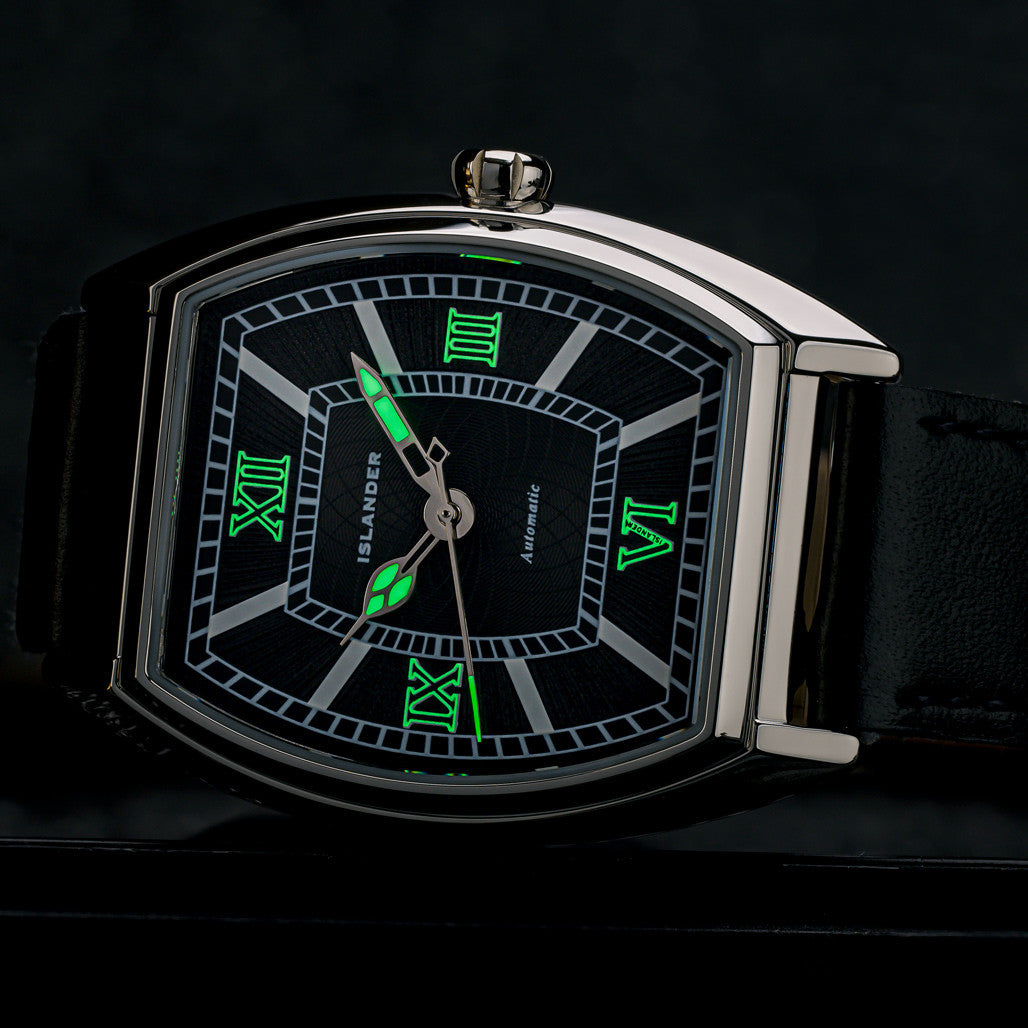
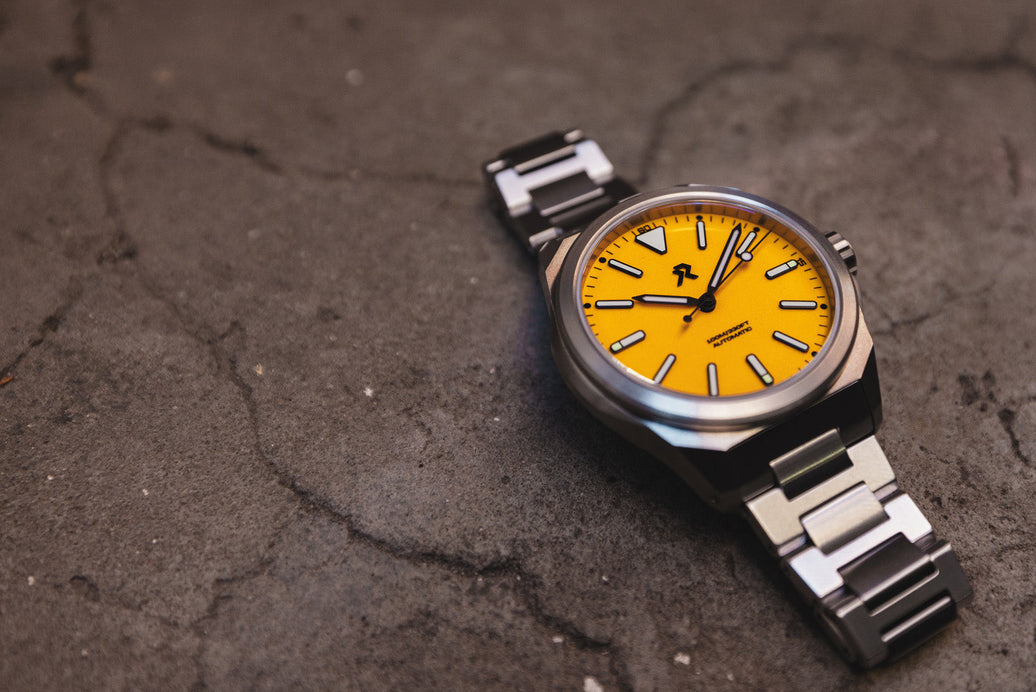
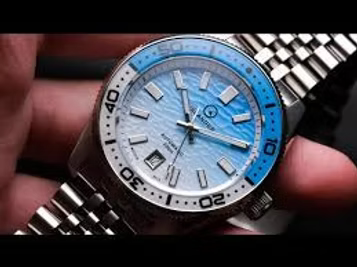
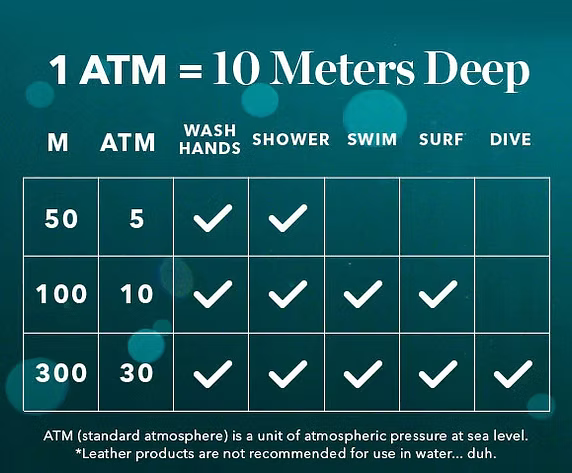
The dial compromise is the main thing that has kept some enthusiasts away from solar, and ring solar is the most convincing answer to it so far. The Islander Babylon is a good example. It uses the Miyota 2170 ring solar movement, so the solar collector sits around the edge of the dial and the dial itself can be fully opaque. It's rated to ±20 seconds per month and runs about four months on a full charge. Those are the solar strengths in practice: accurate, low-maintenance, and happy to sit in a watch box for a while without stopping. Add a titanium case with a hardened coating, a sapphire crystal, and 100 meters of water resistance, and it shows how far solar field watches have come.
FAQ
Q: How does a solar watch turn light into electrical energy?
A: Located immediately beneath the semi-transparent dial is a micro-thin silicon photovoltaic panel. When light photons strike this panel, they excite electrons in the silicon, generating a small DC electric current. This electrical current passes through a charging control circuit that safely feeds energy into a high-tech secondary storage cell (typically a Titanium Lithium-Manganese Dioxide cell).
Q: Do solar watches require direct sunlight, or do indoor lights work too?
A: Solar watches charge under any light source, including indoor fluorescent bulbs, LED desk lamps, and daylight. However, charging speed varies dramatically by light intensity (measured in lux). Direct sunlight on a clear day (~100,000 lux) will fully charge a depleted watch in a few hours, whereas ambient indoor office lighting (~500 lux) requires significantly more exposure to build a substantial charge reserve.
Q: What does it mean when the second hand jumps in 2-second increments?
A: This is the Low Charge Warning Indicator (E.O.L. - End of Life indicator). To conserve energy when the internal rechargeable cell drops below a critical voltage threshold, the movement pauses second-hand movement between intervals, stepping forward 2 seconds at a time. The watch is still keeping accurate time, but it alerts you that it urgently needs exposure to a strong light source.
Q: Do solar watch rechargeable batteries ever need to be replaced?
A: Solar cells do not need frequent battery changes like standard quartz watches, but they are not immortal. The secondary storage cell slowly degrades over time. Modern rechargeable CTL/MT cells are engineered to retain approximately 80% of their original charging capacity after 15 to 20 years of continuous use. Replacement is typically only required if the cell is repeatedly left completely drained in dark storage for years, causing deep discharge damage.
Q: Can a solar watch be overcharged or damaged by left under a lamp?
A: Modern solar movements feature integrated overcharge prevention circuits that automatically disconnect the charging current once the secondary cell reaches maximum capacity. However, you should avoid placing a solar watch too close to intense heat sources—such as incandescent bulbs or direct dashboard sunlight in summer—because high thermal exposure (above 140°F / 60°C) can damage the movement gaskets, crystal, and dial material.















Leave a comment