
| Feature | Hacking Movement (Stop-Seconds) | Non-Hacking Movement |
| Operation | Seconds hand stops when crown is pulled. | Seconds hand continues to sweep. |
| Primary Goal | To-the-second synchronization. | Simple, robust time-setting. |
| Complexity | Uses a lever/spring to stop the balance. | Simpler gear train; fewer parts. |
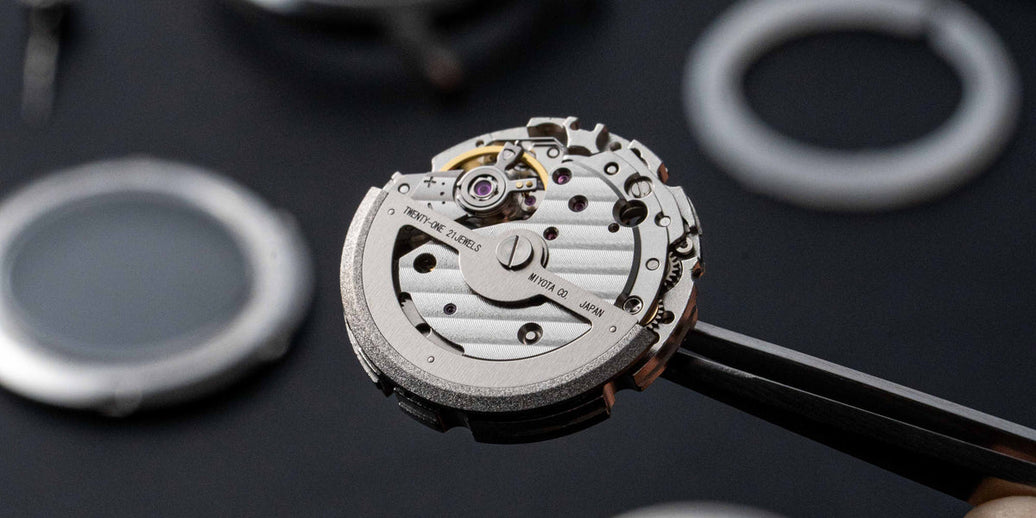
| Standard Movements | Seiko NH35, Miyota 9015, SW200 | Seiko 7S26, Miyota 8215 (Older) |
| Professional Use | Fire, Military, Aviation Ops. | Casual / General everyday wear. |
| Accuracy Check | Can be set exactly to an Atomic Clock. | Usually within +/- 30 seconds. |
Automatic watches are a true marvel of horology, combining craftsmanship with precise engineering. One interesting aspect that sets automatic watch movements apart is the ability to hack or not to hack. In this blog post, we will delve into the fascinating world of watch movements and explore the difference between hacking and non-hacking automatic watch movements.
Understanding Automatic Watch Movements
Automatic watches, also known as self-winding watches, are timepieces that rely on the natural motion of the wearer's arm to keep them running. Inside these watches, a complex system of gears, springs, and a rotor work together to store energy and power the movement of the watch hands.
Hacking Automatic Watch Movements
Hacking is a feature found in some automatic watch movements that allows the wearer to stop the seconds hand precisely at the 12 o'clock position. When the crown (the small knob on the side of the watch) is pulled out to the time-setting position, the hacking mechanism engages, freezing the movement of the seconds hand. This feature proves incredibly useful when setting the time accurately against a reference source, such as an atomic clock.
Advantages of Hacking:
-
Time Synchronization: By using the hacking feature, wearers can synchronize their watch precisely with another timepiece or a time signal, ensuring accuracy.
-
Easy Time Setting: Hacking makes it easier to set the time precisely to the exact second, allowing for precise timekeeping.
-
Chronograph Calibration: Hacking is particularly useful for watches equipped with chronograph functions, as it enables the wearer to synchronize the chronograph seconds hand with the main timekeeping hands.
Non-Hacking Automatic Watch Movements
Non-hacking automatic watch movements, as the name suggests, lack the ability to stop the seconds hand when the crown is pulled out. This means that the seconds hand will continue to move even when the watch is being set. While non-hacking movements may seem less advanced compared to their hacking counterparts, they still offer reliable and accurate timekeeping.
Advantages of Non-Hacking:
-
Continuous Timekeeping: Non-hacking watches provide a seamless flow of time, as the seconds hand never stops. Some watch enthusiasts appreciate this constant motion as it adds a sense of life to the timepiece.
-
Simplicity and Reliability: Without the additional hacking mechanism, non-hacking movements can be simpler in design, potentially leading to enhanced reliability and fewer parts to maintain or repair.
-
Classic Appeal: Non-hacking watches evoke a sense of traditional watchmaking, reminiscent of vintage timepieces that lacked this modern feature.
Choosing the Right Movement
The choice between a hacking or non-hacking automatic watch movement ultimately depends on personal preference and the specific needs of the wearer. If precision and synchronization are of utmost importance, a hacking movement is the way to go. On the other hand, if you prefer a more traditional aesthetic and the continuous motion of the seconds hand, a non-hacking movement may be the ideal choice.
Hacking and non-hacking automatic watch movements offer distinct features and advantages to watch enthusiasts. Hacking movements provide accurate time synchronization, easy time setting, and enhanced chronograph calibration capabilities. Non-hacking movements, on the other hand, offer continuous timekeeping, simplicity, reliability, and a classic appeal. Whether you opt for hacking or non-hacking, both types of movements showcase the craftsmanship and mechanical ingenuity that make automatic watches cherished timekeeping companions.
The automatic watches we currently carry like the Islander lineup, the Laco flieger collection, and the RZE Resolute Pro, all hack and handwind. It's a spec we look for when deciding what to carry, and one we think makes a real difference in day-to-day use. If you're shopping for your first automatic or upgrading to something that makes time-setting effortless, browse our full automatic watch selection.
Frequently Asked Questions: Watch Hacking Explained
Q: Why was "Hacking" originally invented?
A: It was a military requirement (famously in the A-11 navigation watches of WWII). Before hacking, pilots and soldiers had to estimate their synchronization. The "hack" allowed a commander to say "Gentlemen, synchronize your watches," ensuring every man's second hand hit the 12 o'clock marker at the exact same moment for coordinated strikes.
Q: Why do some modern watches still not hack?
A: In 2026, non-hacking is mostly found in "ultra-budget" workhorses or vintage reissues. The logic is durability through simplicity. By removing the hacking lever and spring, you have one less mechanical point of failure. Brands like Vostok or older Seiko 5s used this to ensure the watch could run for decades without service, even if it meant you couldn't sync it to the exact second.
Q: Can I "force" a non-hacking watch to stop?
A: Yes, through a technique called the "Back-Pressure Hack." On many non-hacking movements (like the Seiko 7S26), if you pull the crown to the time-setting position and apply light backward (counter-clockwise) pressure, the second hand will stutter or stop. While this allows for synchronization, it is not recommended to do this forcefully or frequently, as it puts unnatural stress on the cannon pinion.
Q: Does hacking damage the movement?
A: No. Modern movements are designed with a specific "hacking lever" that safely contacts the balance wheel or the fourth wheel to halt the motion. When you push the crown back in, the lever releases, and the mainspring's tension instantly restarts the oscillation. It is a perfectly safe, everyday operation for any movement rated for it (like the NH35 or Miyota 9015).
Q: Is "Hacking" the same as "Hand-Winding"?
A: No, but they often go together. In the past, many entry-level automatics (like the Seiko SKX) were "non-hacking, non-hand-winding," meaning you had to shake them to start and couldn't stop the seconds. In 2026, almost all modern movements,bincluding the Seiko NH series found in microbrands offer both features as standard.
























Leave a comment